
Currently, I am teaching a university course on the mystical experience, and one of the major issues that we confront is: What does a mystical experience look like?
There are many answers to this question, but I would like to offer two pictures today: one from Buddhism and one from Christianity.
Let’s begin with Buddhism. Buddhism is unique among the major world religions in the central place it offers to the mystical experience. In no branch of Buddhism is this aspect more visible than in Zen. Take a look at D.T. Suzuki’s explanation of the mystical experience and its centrality in this article.
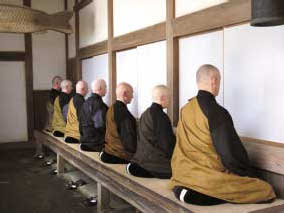
From this perspective, there is an old adage: “If you meet the Buddha on the road, kill him.” The reasoning behind this statement is that if one can recognize the Buddha – the enlightened nature that the Buddha exudes – then you yourself have been enlightened. In that case, you have no further need of a teacher, and teachings then become a crutch at best and a stumbling block at worst. Do not hold on to the Buddha any longer. You have attained enlightenment. So, mystical experience from a Buddhist perspective looks like this:

Now, what about Christianity? Christianity does have mystical experiences that are similar to Buddhist ones. In fact, a lot of fruitful interreligious dialogue has occurred between these religions on the basis of those similarities. However, do those mystical experiences constitute THE mystical experience of Christianity? I don’t believe so, but let me explain a bit.
Mystical experience is the experience when heaven/God/ultimate reality touches an individual. For Christians, the ultimate mystical experience of God and humanity meeting is in Jesus himself. Now, that sounds a bit metaphysical, right? Well, that’s why the mystical experience in Christianity looks like this:
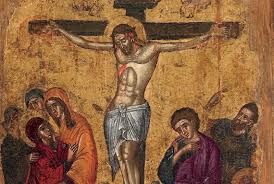
You see – for Christians – mystical experience is about participation in Jesus. That’s why when Paul reflected on meeting Jesus on the Road to Damascus (a mystical experience if ever there was one!) he used these words: “I have been crucified with Christ; and it is no longer I who live, but it is Christ who lives in me. And the life I now live in the flesh I live by faith in the Son of God, who loved me and gave himself for me” (Galatians 2:19-20). For Christianity, the unveiling of reality that occurs in mystical experience — the display of ultimate reality – happens in the connection, the relationship between the divine and human. Mystical experiences must be a communal affair. That’s why Christian mystical encounters result in political and social action, as you can see in this article.
As a result of these differing views, Buddhists practice zazen (sitting meditation) leading to mystical enlightenment, and Christians practice the Eucharist as mystical participation in God through Christ by eating his flesh and blood (the most primal metaphor for becoming “one” with another person).
or
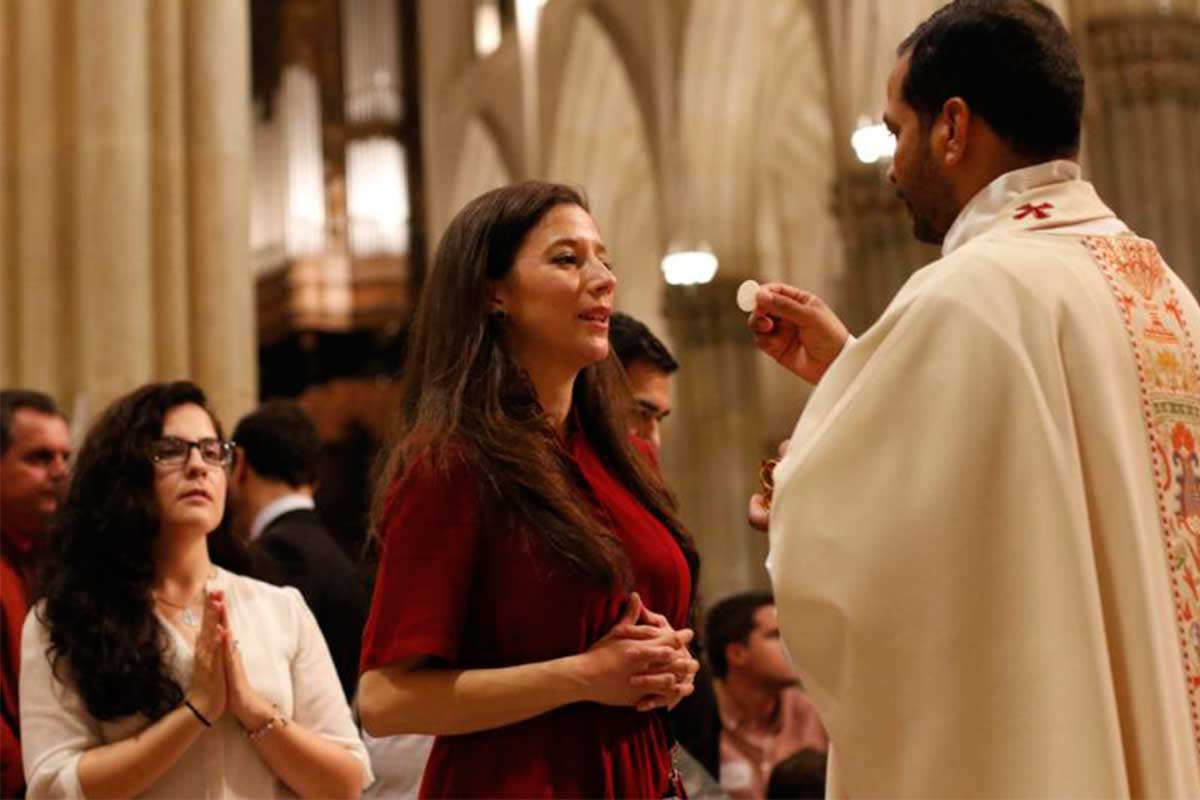
So, to return to the question, what you would do if you met Buddha, Jesus, and Paul on the road? Well, that depends on the kind of person you are. As for me, I think I would suggest that we all share a meal.
As usual in your work, a wonderful, and wonderfully concise and accessible, word.
But I’d love to discuss one thing further:
There is, it seems to me, a dialectic, both/and relation between individual and community. I would go so far as to say that neither community nor individual can even exist in itself; either a community without the individual or the individual without community is dead, does not exist. The community does not exist apart from an intrapsychospiritual component; the community is not just a gathering of contiguous folks but a gathering of those folks who choose intrapersonal presence with each other. The individual does not exist apart from an interpersonal component; in fact an individual placed in isolation as an infant will die. It seems to me that a mystical or any other human experience must include a dialectical relationship of the community and the individual, neither communal alone nor individual alone. Practically, this means I can be sitting alone on the swing in my back yard and, because of my connection with my adopted community, love and pray with folks who are 1200 miles away while sitting alone. So, both Buddha and Jesus, with Paul added for good measure.