
Here is the third installment in my series on a case study of prayer beads as used (and interpreted) in multiple religious contexts. If you missed earlier installments, you can begin with the first section here.
Case Study of Intra-Religious Borrowing
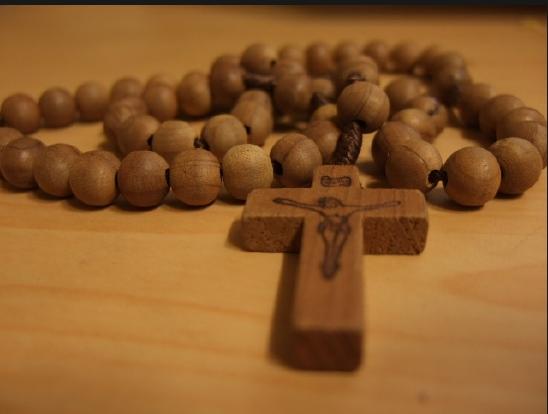
Five years ago, I examined the process of spiritual borrowing in three emergent churches from a qualitative sociological perspective. The main basis for this study was lengthy interviews coupled with limited field work and participant observation. It was a broad-based study, looking at twenty-one discrete practices appropriated from Roman Catholic and Orthodox traditions over to the nascent context of the emergent church, which is an off-shoot from Protestant evangelicalism. Understandably, the process of appropriation and reinterpretation faced fewer theological obstacles, since all groups involved come from the “umbrella” of Christianity in one form or another. As a result, many of the behaviors and rationales which I observed were more subtle than one might expect when approaching this subject from an inter-religious context rather than an intra-religious one. Additionally, and partly to adjust for this difficulty, I concentrated on practices that are theologically at cross-purposes for these different branches of Christianity. I found some interesting trends in the process of borrowing the use of prayer beads (in the interviews, references to “the Rosary” refer to the prayers and use of “rosary” or “rosaries refers to the beads) relating to source of use, variety of use, and purpose of use.
Participants in my study pulled their use of prayer beads from at least one of two sources. First, several interviewees had been raised Catholic, and they held on to the Rosary from their youth. While it was unsurprising that the use of prayer beads arose out of this personal context for them, it was intriguing to note that they didn’t view it as contradictory to use these prayers in a Protestant evangelical environment. In fact, multiple interviewees admitted that they had never even considered the possibility of a contradiction before I brought up the question. The second source for practicing the Rosary was definitely the more instructive for the purposes of spiritual borrowing. Many participants had been introduced to the practice through other members of their current church, and the use of prayer beads was offered as an optional prayer practice to be employed on the basis of one’s personal curiosity and affinity for it after experimentation. One study participant articulated this process at great length:
[James, a former Episcopal priest] taught us why they practice it and has been really good about recognizing our context and telling us “This is just one…way. This is not…you don’t have to practice the Rosary.” He’s… taken away some of the myths that some people from evangelical backgrounds have had about the Rosary, and so, we’ve practiced it in a group. We actually created our own rosaries at a thing a couple of years ago, a few years ago, and…James even had certain beads that…represented different things, and then gave us a prayer to pray along with the Rosary. It might have been the Jesus Prayer, actually, and then had…it was really cool, [be]cause we had kids there that were putting together their rosaries, and their parents were praying with them and…putting it together. So, it’s…maybe something not that you just go and buy and practice, but “Okay, I was actually part of creating this.” It was a really neat thing, but, yeah, I hardly ever do that personally. There’s was just…I see the value in it, and we’ve done it in group.
So, whether introduced through childhood or on the basis of experimentation, the use of the Rosary was an acceptable optional practice in these congregations. Now, exactly how prayer beads were used followed in the same line of reasoning as the experimental source for their use.
The Rosary and rosaries were employed with great latitude for personal preference, but they were typically tied to the desire for a physical dimension in prayer. With regard to preferences, participants commented on the optional nature of prayer bead utilization. For example, “I don’t know that you have to practice all of them. I think there’s just certain ones that some of us are more inclined towards, so I really see the value in that one, but I think…I don’t know that it’s something I would use on a regular basis.” Another interviewee went a bit further in describing the openness with which she views the practice in saying, “So, I don’t know. I sort of buy them and have them, then I don’t quite know what to do with them, but I sort of…pretend I do sometimes. and I actually had a boyfriend who taught me everything, and then…that’s one I sort of flirt with.” While this statement articulated her personal use, “flirting with” was definitely the best image for how the study subjects utilized prayer beads.
Their “flirtations” also stretch out to all aspects of the Rosary. One interviewee commented specifically on her experience in making prayer beads and creating her own prayers to go with them: “I’ve made one, and I’ve used it at times that…usually what I’ve done instead of using the Catholic prayers, there’s some that I found that are from the Episcopal church, and then I actually sat down and wrote up some different prayers of my own.” Another interviewee concentrating on the physical aspect of the Rosary noted that she would often forego the use of beads, simply stating, “my fingers are my beads.” So, as these multiple comments illustrate, these participants – these spiritual borrowers – felt quite free to appropriate and reinterpret. They took a practice which had a long history. While they may not have always known that history specifically, they were aware that the prayer beads carried such a history with them. However, this history did not slow them down in interpreting the use of prayer beads in personal ways, jettisoning any part of the practice that they did not find valuable and adding anything they wished to create a unique recombination. These observations led me to ask my interviewees about the purposes and meanings attached to the Rosary as they used it.
It was at this point that my field work became vitally connected to the difficulty of spiritual borrowing. When borrowing a practice, what does one do with the theological meanings already attached to it? Well, that was the most fascinating piece of the study. The participants minimized, reinterpreted, or simply ignored the minutiae of doctrinal theology in order to tie the practice to what they viewed as larger theological purposes. To explain, they typically focused on the multiplicity of prayer practices. One person simply said, “This is just one way,” and another located the use of prayer beads in the more relatable image of “one more of those…methods to try to keep my two brain cells focused on something.” In each case, they minimized the theological impact of reinterpreting the practice to fit within their own context.
Others tried to circumvent the theological task through focus on the physiological or psychological benefits of the Rosary. For instance, one interviewee connected the purpose of prayer beads only to her personal need: “It’s like a calming thing for me.” Another one commented in a similar vein that “I just find that it quiets my mind.” Very few participants went beyond these purposes to articulate a theological connection, and the ones who did only stated a connection in the broadest terms. For example, an interviewee who was commenting on theological purpose remarked to me, “I don’t think I can differentiate any purpose on any of it, except drawing myself to God.” Even at this juncture, the connection was personally focused and only made in the most general terms. As a result of these interviews, I was able to see that the study participants were appropriating and reinterpreting the use of prayer beads, as well as other spiritual practices, on the basis of a whatever-works-for-me mentality. Any more detailed theological analysis was a process that would have to wait to catch up to their perceived need for experimentation.
While there were definite limits to my study, these trends display valuable insights for the process of spiritual borrowing. These trends are often too subtle over the decades, centuries, or millennia that other cases of spiritual borrowing go through to move from one religious tradition to another. Still, it is these insights from present trends of source, use, and purpose that need to be put in conversation with historical observations of spiritual borrowing. So, it is best to move now to a conversation of the process of spiritual borrowing. Specifically, this discussion will examine how the present and past history of borrowing prayer beads displays the neutrality of spiritual practices. We will then consider the impact such neutrality might have on the construction of doctrinal theology and how this neutrality might give us an important clue about the links among religions for past, present, and future.
Thank you for posting these. I’ve been fascinated by prayer beads and the rosary. I have thought about creating the prayer beads, most likely the smaller Anglican version, as a wrist tattoo This is odd considering that a) I have not prayed through the rosary using beads and b) do not have any tattoos as of yet. Yet, I find this combination strangely compelling.
It is interesting that at least in your example, the practice of using beads gets redefined. How would it be different if it was adopted with knowledge of the full background?
I do have a few questions about how you dealt with the criticism of spiritual borrowing, that borrowing from outside sources corrupts the present practice and may not be neutral.
Does the source of the practice change how correct it seems?
Is it better if the practice is found in many other sources, thus increasing commonality with others and possibly acceptance due to this neutrality, but limiting influence, or in just in one or two others increasing the influence and potential “corruption” with less neutrality?
Is using something on the basis of whatever-works-for-me mentality a potential departure toward heresy?
How would you view spiritual borrowing in context of cultural blendings? For example, the formation of voodoo in Haiti being a blending of multiple African traditions and Catholicism?
Sean,
I’m so glad that you like these posts! There are a few more to come in future weeks, so they may address some of your questions in more detail. Still, I hope to address them a bit here. I do think that understanding the historical provenance of any particular practice can enrich that practice for some people, but it’s true that such knowledge could also make others less excited to use the practice. Honestly, with spiritual practices, I think it is helpful to try it out first to see if it resonates with you. I don’t advocate this approach because the origins of the practice are entirely inconsequential; rather, with almost any spiritual practice, some version of it has circulated among all of the major world religions (and many smaller ones as well). It becomes a bit like the chicken or the egg question. We’re all already “in process” with spiritual borrowing, so it seems a bit arbitrary to just choose a certain point and stop there.
As far as the “whatever works for me” mentality, it doesn’t open up a road to heresy, since the determination of heresy or not would depend on the theological explanations connected to the practice. As I’ve written, spiritual practices themselves do appear to be quite flexible in their neutrality for bearing up under multiple theological meanings assigned to them. Concerning cultural blending, I definitely think that voodoo in Haiti is a good example of how spiritual borrowing works, and it is by no means unique. Cultural and spiritual blendings are happening all the time (often in ways that seem very different from the original cultures/religions). For instance, I’ve spent a lot of time studying American Evangelical Christianity. It is a cultural blending of British Evangelicalism (which was itself borrowed German Pietism) and American Pragmatism. It may not seem as “strange” as voodoo in Haiti, but that’s only because we see it every day around us. It normalizes the process for us.