
 Hi, there! It’s been a while.
One of the main reasons that I became Episcopalian was the way that they view the sacraments. For a quick refresher of that viewpoint, you can check out the Catechism in the back of the Book of Common Prayer:
The Sacraments
Q. What are the sacraments?
A. The sacraments are outward and visible signs of inward
and spiritual grace, given by Christ as sure and certain
means by which we receive that grace.
Q. What is grace?
A. Grace is God’s favor toward us, unearned and
undeserved; by grace God forgives our sins, enlightens
our minds, stirs our hearts, and strengthens our wills.
Q. What are the two great sacraments of the Gospel?
A. The two great sacraments given by Christ to his Church
are Holy Baptism and the Holy Eucharist.
(p. 858-859 in print or you can find the BCP Online at https://www.bcponline.org/)
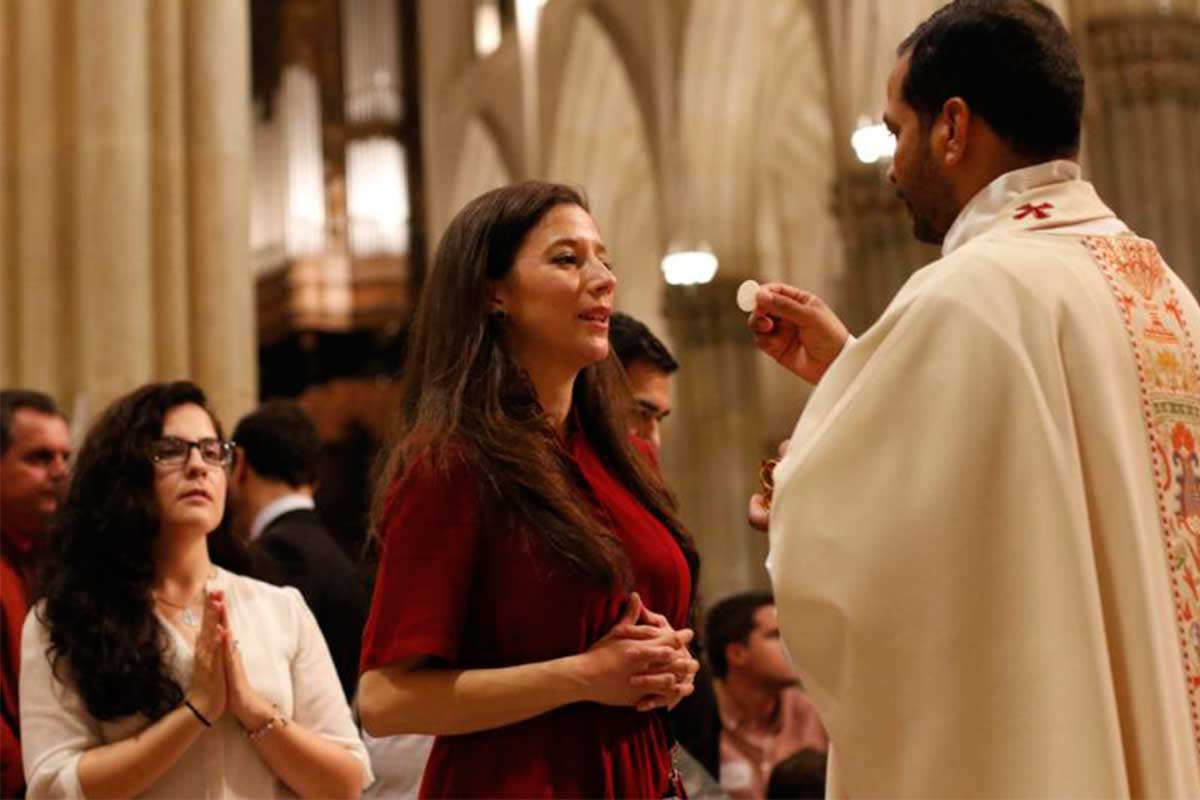
Particularly, I love how we celebrate the Eucharist (i.e., Communion, Mass, Lord’s Supper) every single Sunday (at least). Another piece I love is how that is described in the Catechism:
Q. What is the outward and visible sign in the Eucharist?
A. The outward and visible sign in the Eucharist is bread
and wine, given and received according to Christ’s
command.
Q. What is the inward and spiritual grace given in the
Eucharist?
A. The inward and spiritual grace in the Holy Communion
is the Body and Blood of Christ given to his people, and
received by faith.
Q. What are the benefits which we receive in the Lord’s
Supper?
A. The benefits we receive are the forgiveness of our sins,
the strengthening of our union with Christ and one
another, and the foretaste of the heavenly banquet which
is our nourishment in eternal life.
Now, why do I love these theological descriptions so much? Well, the reason I love them is that in the Eucharist I feel the solidarity of so many others coming together to see differently, which is something I do all the time.
Let me explain that a bit more, by telling you a recent story about my son and me.
My son, Clark, comes with me to services every Sunday, and, like most nine-year-olds, he is much more interested in Sunday School or coffee hour than the Eucharist. However, unlike most nine-year-olds, and very much like me, Clark is autistic. He sees the world differently. A lot of the time I try to interpret what’s happening into ways that make more sense to him. I spent way too much of my life figuring out that I just didn’t quite see things the way others do. As a result, I learned to pay attention to how others act and to act accordingly. Sometimes that works; sometimes it doesn’t.
So, one Sunday that Clark was particularly disinterested in the Eucharist, I leaned over and told him, “Psst, I’ve got a secret to tell you later.” When we were in the truck after church, I told him that the Eucharist might be hard to follow, but it is really cool because it’s like looking into a different dimension. “You see, spiritually, we’re all being connected to Jesus, his life, and all that he did. It’s like time travel. Also, we’re all being connected to each other, mystically in Jesus, and physically because we are all eating the same bread and wine.” We then continued to a discussion of the molecular and atomic level as to what sharing the same food means for connecting everyone together. I ended by saying, “You know, Clark, it’s the one time that everyone agrees to act the way we have to act. They agree to believe that this is the way reality really is, even though they can’t literally see Jesus there or completely understand how it all works. It’s the way we look around and have to believe that reality works a certain way that isn’t obvious to us.” Clark said, “Cool,” to that, and he switched the subject to comic books.
Still, it’s something I think about from time to time, the Eucharist is a sacrament, a mystical communion, but it’s also a humble agreement to believe in what’s really real, even if we can’t see or understand it.
Together.
To me, that’s an encouraging thought.
I’ve wondered often, “Who teaches most, parent or child?” In your case, Dann, the two of you join together to teach us. Thank you.